




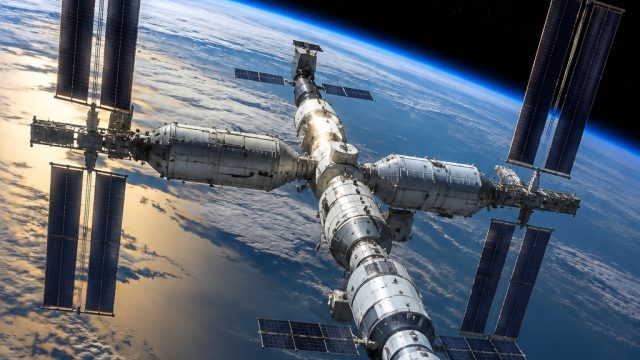
As international interest in space exploration ramps up, China's space program is making headlines once again. The nation is preparing to expand its current space station, currently structured in a T-shape, into a more advanced cross shape. This significant development marks a new chapter in space research and technology, facilitating enhanced capabilities for scientific experiments and international collaboration.
The Current Structure of China's Space Station
China's space station, operational since its initial setup, consists of three primary modules: the Tianhe core module, the Wentian lab module, and the Mengtian lab module. These modules have been instrumental in various scientific endeavors, from advanced biological experiments to space technology validation.
Tianhe Core Module
The Tianhe module serves as the heart of the space station, providing essential life support systems and living quarters for astronauts. Its robust infrastructure is designed to support long-duration missions and is the command center for the entire station's operations.
Wentian and Mengtian Lab Modules
These lab modules are equipped for a variety of scientific research projects. They offer facilities for biological experiments, material science studies, and technology tests. With the upcoming expansion, these modules will play an even more significant role in enhancing scientific output.
What's Next? The Expansion Plans
The upcoming expansion will introduce new configurations and additional modules to bolster the station's capabilities. The first phase of this expansion is set to commence shortly, and it aims to integrate new technologies that will enhance both operational efficiency and research potential.
Enhancing Research Opportunities
- Increased Laboratory Space: The new design will provide additional laboratory space for onboard experiments, allowing for more comprehensive research.
- International Collaboration: By expanding the station's capabilities, China aims to attract international partnerships for shared scientific endeavors, fostering global cooperation.
- Advanced Technological Integration: The inclusion of new technologies will enable the station to conduct more sophisticated experiments previously not possible.
Significance of This Expansion
This expansion is more than just a structural upgrade; it is a strategic move by China to solidify its position in the global space community. By increasing the capacity and capabilities of its space station, China can engage in more complex scientific research and encourage international interest in collaborative projects.
Implications for Global Space Research
The upcoming changes may lead to groundbreaking advancements in various fields, including:
- Astronomy: Enhanced observational capabilities can lead to new discoveries regarding celestial phenomena.
- Biotechnology: Research on long-duration human spaceflight will provide insights into human health and performance in space.
- Material Sciences: Understanding how various materials behave in microgravity can lead to innovations in manufacturing and technology.
Conclusion: A New Frontier in Space Exploration
As China gears up for the expansion of its space station, the implications for scientific research and international collaboration are vast. This initiative not only reinforces China's ambitions in space exploration but also serves as a catalyst for global partnerships in scientific research. As we approach this new era, the excitement surrounding space exploration continues to grow, positioning the China space station as a pivotal player on the international stage. Keep an eye on this evolving story as it unfolds.
