




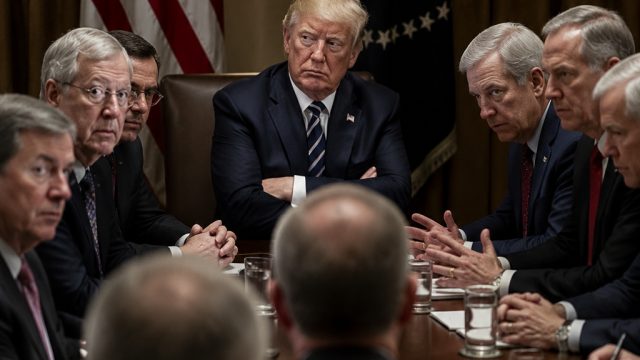
In a pivotal moment for the Republican Party, former President Donald Trump held a charged meeting with Senate Republicans, signaling potential discord within the party as it approaches crucial legislative decisions. This encounter comes at a time when party unity is essential, setting the stage for future political maneuvers as elections loom.
The Meeting: A Clash of Perspectives
During a closed-door lunch, Trump and GOP senators experienced a heated exchange that showcased the underlying tensions regarding party strategies. Reports indicate that the atmosphere was fraught as Trump expressed frustration with some senators' reluctance to fully embrace his agenda. This confrontation underscores the delicate balance the Republicans must maintain as they prepare for upcoming votes.
Key Points of Contention
- Legislative Priorities: Senators voiced concerns over Trump's recent decisions, questioning the prioritization of certain legislative goals.
- Party Unity: Trump's insistence on loyalty has raised questions about whether dissent is tolerated within GOP ranks.
- Electoral Strategy: Discussions touched on the importance of presenting a united front leading up to elections, with some senators advocating for a more moderate approach.
Why This Matters Now
The timing of this meeting is critical. As the Republican Party navigates a complex political landscape, the need for unity has never been more pressing. With upcoming elections on the horizon, the dynamics between Trump and Senate Republicans could significantly influence voter sentiment and party performance.
Implications for Future Legislation
Senate Republicans must consider the reactions and feedback from their constituencies. The rift evident in the meeting could spell trouble for advancing key legislation, especially if dissent grows among party members. A clearer strategy must be developed to ensure that Trump’s influence does not overshadow the legislative process.
The Road Ahead for the GOP
As the Republican Party looks to solidify its stance ahead of elections, it faces several challenges:
- Building Consensus: Finding common ground among diverse factions within the party is essential for moving forward.
- Addressing Voter Concerns: Senators need to engage actively with their constituents to understand their priorities and expectations.
- Enhancing Communication: Streamlined communication between Trump and Senate leaders could help mitigate further tensions.
In conclusion, the recent meeting between Trump and Senate Republicans highlights a critical juncture for the GOP. The challenges they face are significant but not insurmountable. As party members navigate these complexities, the focus should remain on unity and clear communication to ensure effective governance and electoral success.
