




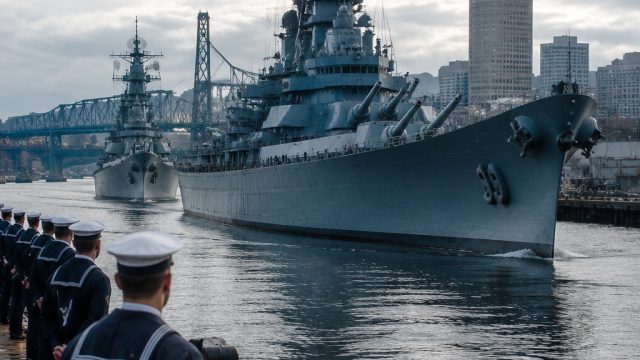
In a significant move, the U.S. battleships Wyoming, New York, and Utah concluded their three-day visit to Portland, Maine, and have set sail for Charleston, South Carolina. This departure not only marks the end of a noteworthy public engagement but also raises questions about the evolving dynamics of U.S. naval strategy.
Understanding the Significance of the Visit
The visit to Portland provided a platform for public engagement and showcased naval capabilities. With modern battleships often a focal point of military parades and community events, this visit was an excellent opportunity for the public to connect with the U.S. Navy. The battleships, particularly the Wyoming, which served as the fleet's flagship, symbolize a commitment to maintaining a visible naval presence in U.S. waters.
Public Engagement and Community Interaction
- Open house events allowed local citizens to tour the ships, fostering community relations.
- Naval personnel participated in outreach programs, stressing the importance of naval history.
- Educational initiatives aimed at inspiring youth interest in military careers.
The Broader Context of Naval Operations
The departure from Portland comes amid heightened geopolitical tensions and evolving maritime challenges. As nations increase their naval capabilities, the U.S. Navy's strategy adapts to maintain a competitive edge.
Current Geopolitical Climate
With nations like China and Russia expanding their naval forces, the U.S. is compelled to rethink its operational strategies. The presence of battleships in key ports serves not only as a show of strength but also as a reassurance to allies.
Implications for Future Naval Deployments
As the U.S. Navy transitions back to Charleston, the following considerations emerge:
- Reinforcement of alliances in the Atlantic and Pacific regions.
- Preparation for rapid response capabilities in case of regional conflicts.
- Increased emphasis on joint operations with allied forces.
Historical Significance of Naval Warships
Battleships have long been symbols of national pride and military might. Their design and operational capabilities have evolved, yet they remain a critical component of naval strategy. The Wyoming, New York, and Utah carry with them decades of history, serving various roles throughout their service lives. Understanding their history contributes to grasping the importance of their current missions.
Legacy and Modernization
Today’s battleships, while rooted in tradition, are equipped with advanced technology that supports modern naval warfare.
- Integration of cutting-edge navigational systems enhances operational effectiveness.
- Adoption of advanced weaponry systems ensures competitive capabilities.
- Modern battleships are increasingly involved in humanitarian missions and disaster response.
Conclusion: The Importance of Naval Presence
The departure of the battleships from Portland serves as a reminder of the U.S. Navy's ongoing commitment to national defense and global maritime security. As these ships head to Charleston, they carry with them not just personnel and equipment, but also the weight of a legacy that underscores the importance of a strong naval presence in today's world.
In an era marked by unpredictability, the U.S. Navy’s ability to adapt and respond to emerging threats is crucial. The recent port visit serves as a strategic pivot, reinforcing the notion that maintaining a robust naval fleet is essential for safeguarding interests both domestically and internationally.
