




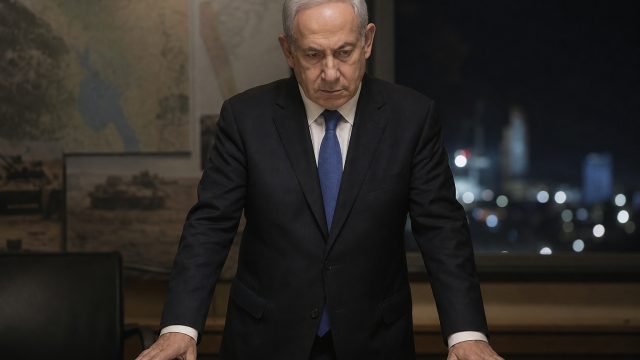
Netanyahu's Political Dilemma: A War of Choices and Consequences
In a rapidly shifting political environment, Israeli Prime Minister Benjamin Netanyahu finds himself at a critical juncture. His long-standing narrative about Iran's nuclear ambitions as an existential threat to Israel has now evolved into a complex reality, where strategic decisions may have far-reaching consequences not only for Israel but for the entire Middle East.
The Longstanding Threat of Iran
For over three decades, Netanyahu has positioned Iran as the core danger to Israeli security. His assertions have mobilized both domestic and international support for stringent policies against Tehran's nuclear pursuits. Underpinning these claims is a continuous push for military readiness and allied cooperation aimed at countering what he describes as an imminent threat. However, as the geopolitical landscape shifts, the efficacy of these strategies is now being called into question.
Changing Tides in Middle Eastern Alliances
As countries in the region re-evaluate their alliances and strategies, the narrative surrounding Iran's threat is undergoing transformation. Nations that once viewed Iran solely through the lens of hostility are now exploring various forms of engagement. This evolution raises questions about the future of Netanyahu's policies and whether they can adapt to an increasingly multifaceted geopolitical environment.
Internal Pressures and Opposition
Netanyahu’s grip on power is further complicated by domestic challenges. As public sentiment shifts, his administration faces mounting pressure from political rivals and civil society. The ramifications of prolonged conflict or miscalculated military actions could lead to significant political fallout domestically. The Prime Minister must balance military readiness with the will of the people, all while navigating a contentious political landscape.
Popular Sentiment on Military Action
- Growing skepticism around military options against Iran.
- Calls for diplomatic engagement rather than confrontation.
- Increasing concerns over the impact of war on civilian life.
Global Reactions and Implications
International responses to Netanyahu's strategies further complicate the scenario. The global community remains vigilant, with diplomatic channels increasingly focused on mitigating tensions rather than escalating them. The U.S. and other allies are urging for a balanced approach that considers not only Israel's security but also regional stability.
The Role of Allied Nations
As Netanyahu navigates this delicate landscape, the role of Israel's allies becomes critical. The approach taken by the U.S. and European nations will be pivotal in shaping the outcomes of Netanyahu's decisions. A failure to align strategies could lead to diminished support for Israel, risking its strategic interests in the region.
Conclusion: A Path Forward
Netanyahu stands at a crossroad: the decisions made today will echo through the future of Israel and the broader Middle East. Balancing military objectives with diplomatic strategies is essential for not only preserving his leadership but also for ensuring the safety and security of Israel as a nation. As tensions simmer, the world watches closely, recognizing that the next steps taken by Netanyahu could significantly influence the geopolitical landscape.
