




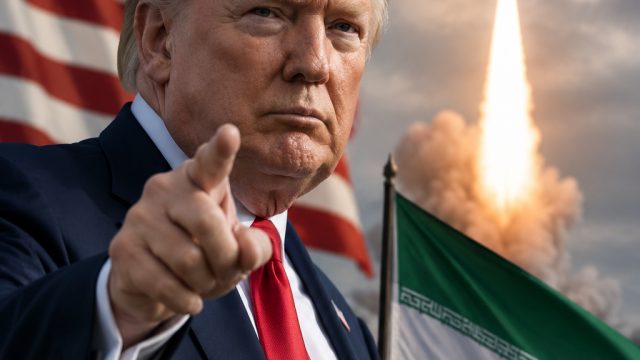
Tensions Rise as Trump Sends Strong Message to Iran Amid Diplomatic Talks
In a significant geopolitical moment, former President Donald Trump has issued a stern warning to Iran, coinciding with ongoing diplomatic discussions in Switzerland. This surge in rhetoric comes at a pivotal time as Iran engages in talks with U.S. representatives, which could have far-reaching implications for regional stability.
The Context of Ongoing Negotiations
Recent reports indicate that diplomatic representatives from the U.S. and Iran have been meeting in Switzerland to discuss various issues, including sanctions relief and regional security. These talks have reportedly instigated a decrease in violence in Lebanon, highlighting the delicate balance of power in the Middle East. Iran's officials have credited the Swiss discussions for defusing tension in Lebanon, an area that has seen escalating conflicts due to various factions vying for control.
Iran's Response to Trump's Warning
In the midst of these diplomatic efforts, Trump’s direct admonition towards Iran has created ripples. His message underscores America’s steadfast stance against Iranian aggression, particularly in light of Iran's controversial activities in the region. Iran has maintained that the Swiss negotiations are crucial in preventing further bloodshed, suggesting that they view Trump’s warning as an unwelcome distraction.
The Implications for U.S.-Iran Relations
The intersection of Trump’s warning and the ongoing negotiations raises several questions regarding the future of U.S.-Iran relations. Analysts suggest that Trump's statements could complicate the already intricate diplomatic landscape. As Trump continues to exert influence within the Republican Party, the potential for a hardline approach could shape the Biden administration's strategies in dealing with Iran.
Consequences for Regional Stability
With tensions simmering, the implications of these diplomatic talks extend beyond Iran and the U.S. The stability of Lebanon, key to broader Middle Eastern geopolitics, hangs in the balance. Here’s what’s at stake:
- Potential for Renewed Conflict: If diplomatic efforts falter, the risk of escalating violence in Lebanon and surrounding areas remains high.
- Sanctions and Economic Impact: The outcome of negotiations could lead to either a relaxation of sanctions or the imposition of new ones, affecting the Iranian economy significantly.
- Influence of Regional Powers: Other countries in the Middle East are closely monitoring these developments, with various factions seeking to tilt the balance in their favor.
The Role of International Actors
The Swiss discussions are not occurring in a vacuum. Various international actors, including European nations and Russia, are keen on maintaining stability in the region. Their involvement is crucial as they aim to mediate between Iran and the U.S., striving for a comprehensive agreement that addresses both nuclear and non-nuclear concerns.
What Comes Next?
As the situation evolves, the world watches closely. Will the Swiss talks lead to a breakthrough or further entrenchment of positions? The outcome could redefine Middle Eastern geopolitics and influence global oil markets, international security dynamics, and diplomatic relations.
Conclusion: A Delicate Balance
The path forward remains uncertain, with Trump’s warning adding another layer of complexity to an already fragile situation. As negotiations continue, the commitment of all parties involved to engage in constructive dialogue will be essential in navigating the turbulent waters of U.S.-Iran relations.
At Ulvesta, we aim to keep our audience informed on these developments as they unfold, highlighting the importance of diplomacy and strategic negotiations in our interconnected world.
