




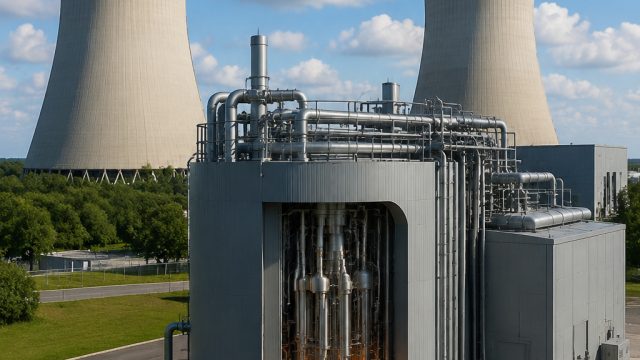
In recent years, the spotlight has turned to microreactor technology, a revolutionary advancement that is poised to transform various industries. As businesses and governments seek sustainable and efficient energy solutions, microreactors emerge as a promising alternative, allowing for decentralized energy production and enhanced safety measures. This article delves into the current landscape of microreactor technology, its implications for the future, and why understanding its growth trajectory matters now more than ever.
Understanding Microreactor Technology
Microreactors are compact nuclear reactors designed to deliver energy at smaller scales compared to traditional reactors. They present unique advantages, such as:
- Modularity: Easily scalable to meet varying energy demands.
- Safety: Enhanced safety features reducing the risk of catastrophic failures.
- Cost-effectiveness: Lower initial investment and operating costs.
As the world grapples with climate change, the need for sustainable energy solutions has never been more pressing. Microreactors could facilitate cleaner energy production while meeting the energy needs of remote locations and industries.
Current Market Trends in Microreactor Technology
The microreactor technology market is burgeoning, fueled by several key trends:
1. Increased Investment and Research
Governments and private enterprises are significantly investing in the research and development of microreactors. For instance:
- The U.S. Department of Energy has allocated funds for several pilot projects aimed at demonstrating the viability of microreactors.
- Private companies are exploring partnerships with academic institutions to enhance research credibility and drive innovation.
2. Enhanced Safety Regulations
With the rise of microreactors, there is a shift towards stricter safety regulations to ensure public confidence:
- Governments are establishing frameworks to ensure that microreactors adhere to high safety standards.
- Improvements in technology are enabling better monitoring and control systems.
3. Focus on Sustainability
Microreactors are viewed as a sustainable alternative to fossil fuels, promoting a greener future:
- They can significantly reduce greenhouse gas emissions and dependence on traditional energy sources.
- By promoting local energy production, they also enhance energy security.
Potential Applications of Microreactor Technology
The versatility of microreactors allows for various applications across different sectors:
1. Remote Operations
Microreactors can power remote sites, such as:
- Mining operations
- Military bases
- Research stations
2. Industrial Use
Industries can leverage microreactors for:
- Continuous process heat
- Power generation
- Hydrogen production
3. Urban Energy Supply
As cities strive for sustainability, microreactors can contribute by:
- Supplying power to residential areas
- Integrating with existing energy grids
Challenges Ahead for Microreactor Technology
Despite its promise, microreactor technology faces several challenges that need addressing:
1. Public Perception
Public skepticism about nuclear energy remains a significant hurdle. Building trust through education and transparency is vital.
2. Regulatory Hurdles
The regulatory landscape for nuclear technology can be daunting. Streamlined processes are necessary to facilitate innovation.
3. Market Competition
As the energy market evolves, microreactors will compete with other renewable technologies, such as solar and wind energy.
Conclusion: The Future of Microreactor Technology
Microreactor technology stands at the forefront of the energy revolution. With increasing investment, a focus on sustainability, and ongoing research, it is set to play a pivotal role in the energy landscape. As we navigate the challenges ahead, the industry must promote awareness, address public concerns, and encourage innovation to unlock the full potential of this groundbreaking technology. For businesses and stakeholders in the energy sector, understanding these dynamics is crucial to leveraging opportunities in this emerging market.
